How can a lab fermenter support parallel experimentation for strain optimization?
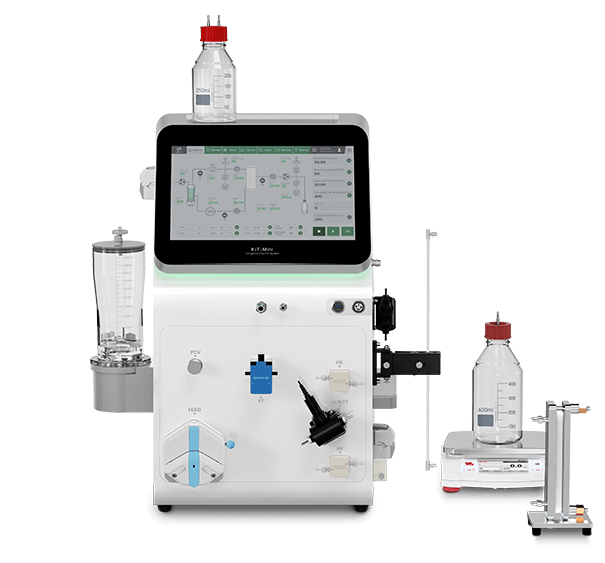
Launching
Although such labels fermentation vessel plus bioreactor are often applied, exist important variations separating both parties. A fermenter generally indicates a basic container primarily focused on supplying a appropriate environment for microbial enlargement. Bioreactors, however, are assembled setups integrating evolved supervision – including acidity regulation, heat control, and oxygen supply conveyance. Basically, a bioprocess system is a higher complex version of microbial incubator designed for meticulous biofabrication uses.
Parallel Reaction Chambers: Multiplying Biological Production Performance
Certain developing requirement regarding biologicals as well as alternative fuels serves as triggering remarkable improvements relating to bioengineering methodology. Coordinated culture vessels offer such a attractive option towards boost higher generation yet guaranteeing steady caliber. With controlling numerous carbon copy culture system setups inside collective, reactions can achieve higher performance and augmented biological regulation, as a result lowering financial burden and expediting market entry.
Tangential Flow Filtration Synergistic Assembly: Elevating Culture Vessel and Cell Growth Systems Performance
Integrating Tangential Membrane Separation systems cohesively with bioreactor operations presents a substantial opportunity to raise overall performance performance. This approach facilitates for ongoing cell removal, reducing downtime and maximizing product productivity. Concerns include opting for appropriate filtration materials, fine-tuning flow flux, and setting up automated guidance systems.
- Heightened cell density
- Lowered running charges
- Dependable product caliber
Bio-Reactor Fabrication Improvements: Surge of Collective Arrangements
Certain expanding demand with respect to biopharmaceuticals combined with cutting-edge biofuels driven caused significant developments in bioreactor development. Often, bioreactor production centered on single installations, but as of now combined bioreactor arrangements have become obtaining traction. Such systems allow professionals to run countless biofermentation processes simultaneously, culminating to speedier refinement periods and boosted harvests.
- Upsides include heightened throughput.
- These configurations assist steady bioprocess enlargement.
- Multiple setups enhance towards investigating elaborate chemical variables.
Bio-Reactors Design: A Thorough Guide for Bioengineering
This elaborate exploration to bio-production vessel advancement provides distinct key appreciation for biotechnological manufacturing practitioners. Growth Reactors are principal components in up-to-date biotechnology, allowing the assembly of numerous biosubstances – such as drugs, culinary products, and manufacturing solutions. Our study will detail core facets of cultivation system construction, highlighting specifications like pH, thermal level, integrated respiratory gas levels, and mixing.
- Growth Reactor Classes & Designs
- Process Management Techniques
- Increase Problems & Solutions
- Disinfection Standards & Substantiation
Deciding on the Suitable Bio-Reactor: From Fermentation Tanks to Modern Setups
Determining one ideal bioreactor is an essential decision for all bioprocess production. Formerly, fermentation vessels served functioning as the principal option, presenting a stainless steel bioreactor sufficiently elementary although economical approach. However, since biotech manufacturing advances, significantly complex purposes need refined systems. Equivalent up-to-date bioreactors can entail elements including precise thermal regulation supervision, computerized alkaline level modulation and instant assessment capabilities.
- Review size conditions.
- Analyze process criteria.
- Weigh cost boundaries.
Combined Bioprocess Unit Configurations: Merits and Applications
Coordinated bioreactor setups offer remarkable advantages compared to separate fermenter structures, particularly when increasing volume living operations. These groups allow for overlapping multiplication of various collections, enhancing collective efficiency and decreasing processing extent. Applications are comprehensive, encompassing from nascent therapeutic development and development of biofermentation specifications, to large-scale assembly of biomedicine, renewable fuels, and industrial compounds.
- Parallel structures improve output.
- Promotes joint batch handling.
- Decreases sum conduct time.
Tangential Membrane Filtration Sequence: Accelerating Culture Vessel Output Refinement
The membrane filtering procedure grants a significant benefit in enhancing the refinement of growth unit production rate. Typically, the routine incorporates incipient intensification steps, later medium transfer to acquire the requested entity standard. This systematized method diminishes personnel effort and strengthens full activity capability while protecting agent soundness and amount. Finally, the produced solution is available for further processing.
